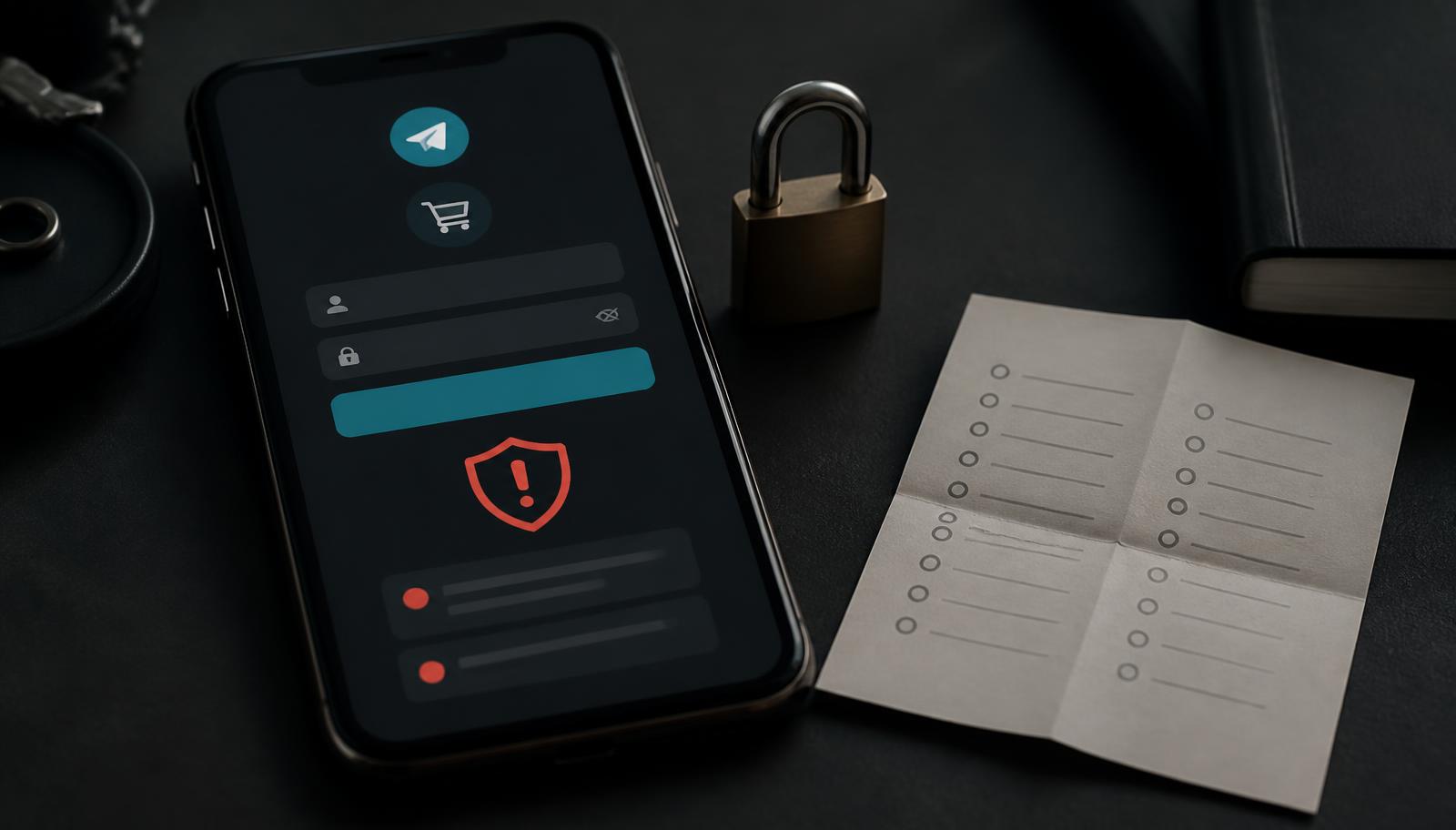
Why scams concentrate around Fragment
Fragment sells digital assets with real market value, payments settle in irreversible TON transfers, and the customer base is global. Those three conditions make it attractive both to legitimate traders and to fraudsters who know that a confused buyer has no chargeback button.
The cleanest defence is to remember that anything of value on Fragment already exists as an on-chain lot. If a seller cannot point you to that lot with a transparent auction history, scarcity grade and current bid, you are not buying on Fragment — you are buying a story.
The four scams you are most likely to see
Fake marketplace sites copy the official Fragment user interface and run paid ads or direct messages to them. They harvest your recovery phrase or trick you into signing a transaction that transfers assets out. The domain name is usually close to the real one but not identical — a misspelling, an extra hyphen, a different top-level domain.
Impersonation support contacts message you after you post a buying or selling request. They claim they can unlock an account, expedite a transfer or refund a failed bid. Real Fragment support never contacts users first and never asks for a wallet phrase.
Fake escrow intermediaries promise to hold both the asset and the payment. The intermediary is the scammer, and once either side sends their part of the deal they disappear. Fragment auctions already perform the same function trustlessly; any third-party escrow is a red flag.
Off-platform private sales use edited screenshots, cloned wallets or promises of a discount for urgency. Because the asset transfer and payment cannot be enforced, the only party protected is the one who receives their half first, which is usually the seller.
- Never follow marketplace links from ads, forwarded messages or search results.
- Any unsolicited support contact is fraudulent — block it immediately.
- There is no legitimate escrow outside the Fragment auction contract.
- Urgency and discounts are the most reliable signals of a scam.
How to verify that a listing is real
Real Fragment assets live on the TON blockchain and the lot page shows a contract address. Ask the seller for the direct link to the lot on fragment.com, copy it manually into your browser, and check that the linked address matches the asset in Telegram. If the seller refuses or sends a different URL, stop.
For usernames and numbers, the owner shown on the lot page should match the Telegram account you are negotiating with. An asset cannot be transferred without an on-chain transaction, so screenshots, promises and audit files prove nothing.
If you are buying Telegram Premium, the only safe path is a gift subscription delivered through Telegram itself. Anyone offering Premium in exchange for a direct TON payment should be treated as a scam unless the payment happens through the official Fragment Premium sale page.
A two-minute safety checklist before every transaction
Run through these steps every time, even when the other party sounds trustworthy. Fraucceeds when routine drops, so make the routine impossible to skip.
- Open Fragment only from the official Telegram app entry point.
- Verify the lot exists and is owned by the seller's wallet.
- Compare the username or number you are buying with the lot details.
- Refuse private off-platform transfers, even at a discount.
- Never share your recovery phrase, password or screen with anyone.
- Send a small test transaction if the seller objects to the marketplace.
What to do if you suspect a scam
If you have shared a recovery phrase, create a new wallet immediately and move any remaining assets. If you have signed a suspicious transaction, check your wallet history on a block explorer and consider revoking permissions if the signer tool supports it.
You can report fake websites to the registrar and fake apps to the platform store. Share warnings in the communities where you found the contact, and remember that many scammers rely on embarrassment to keep victims silent. Reporting reduces the chance that the next person falls for the same trick.
Frequently asked questions
› Is it safe to buy Fragment assets outside the auction?
Generally, no. A private sale has no enforcement mechanism, so the seller can take payment and never transfer the asset. The auction contract guarantees simultaneous payment and transfer.
› How can I tell the real Fragment website from a fake?
Only reach it through the official Telegram entry point. Check the domain name carefully; small spelling differences are the most common sign of a phishing copy.
› Will Fragment support ever message me first?
No. Any unsolicited message claiming to be from Fragment or Telegram support is a scam. Support does not contact users to resolve auctions or account issues.
› Can I recover TON sent to a scammer?
Usually not. Blockchain transfers are final. Prevention, verification and using the official marketplace are the only reliable protections.
Keep reading
In-depth articles
Long-form explainers on bidding, security and market history — each linked from the guides above.
 Fragment auction strategy: how bidding really works and where newcomers lose moneyHow Fragment auctions work, how the anti-sniping window changes bidding, and mistakes that cost first-time buyers TON.Read the article →
 TON wallet security for Fragment buyers: the threats that actually take assetsSeed-phrase hygiene, fake auction links and transfer scams — the security practices that protect a Fragment purchase.Read the article →
 Fragment market trends: what years of auction data reveal about Telegram asset pricingFrom the 2022 launch auctions to a maturing secondary market — the demand cycles, category divergence and liquidity realities behind Fragment pricing.Read the article →
Understand Fragment before you bid
Read the three asset guides, then the step-by-step buying walkthrough — around twenty minutes of reading that can save an expensive mistake.